
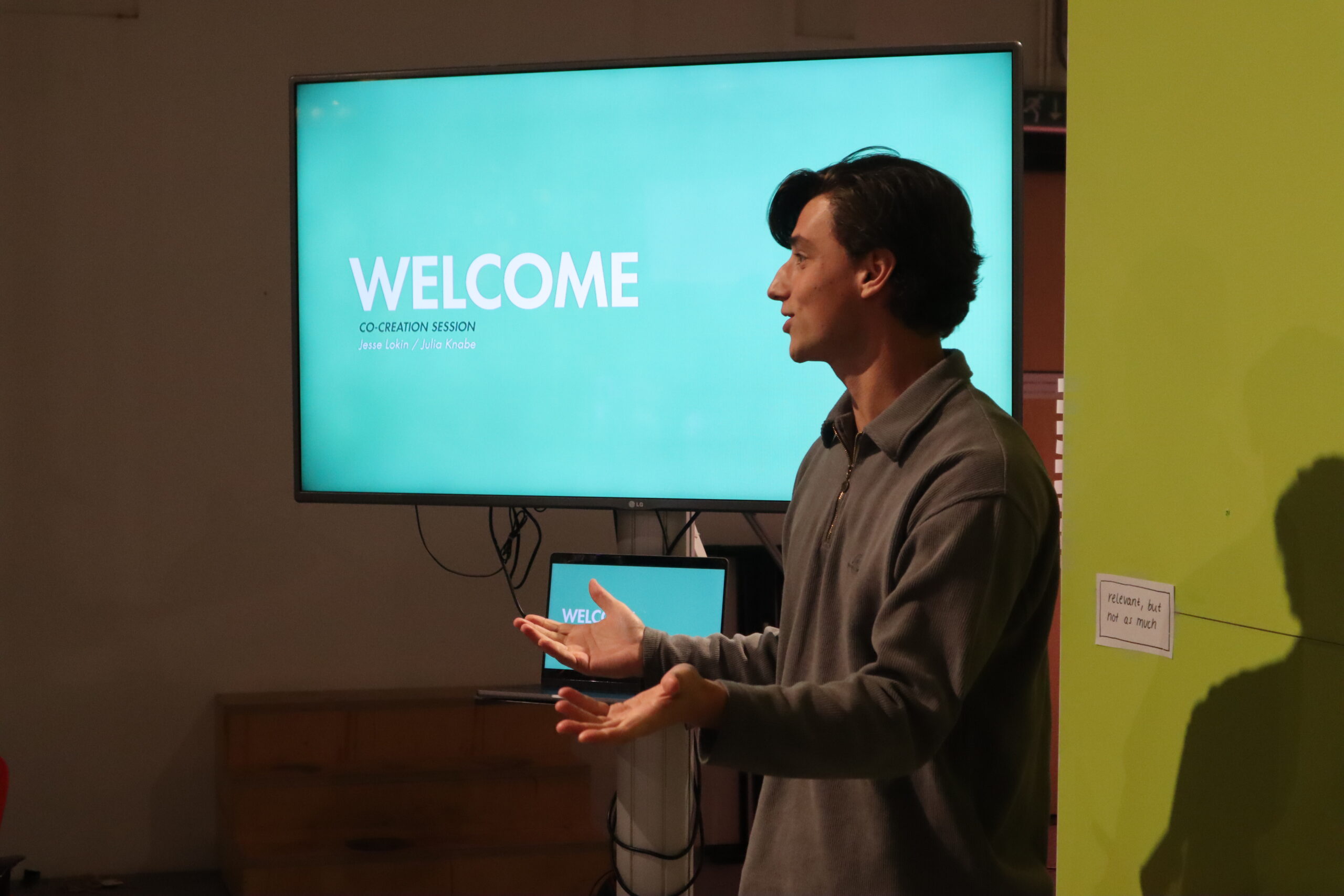
Several MSc students have collaborated with the ShaRepair Practices project, exploring how sharing, repairing, and circular practices can contribute to a more sustainable society. Their research examines a wide range of topics, from borrowing and repair cultures to circular economy initiatives and digital sharing platforms.
Reframing Borrowing into an Inclusive and Everyday Practice
Dimpy Gupta
In her thesis, Reframing Borrowing into an Inclusive and Everyday Practice, Dimpy Gupta investigated how sharing initiatives can become more accessible to a wider range of people. Focusing on the Bieb der Dingen (Library of Things) in Amsterdam Zuidoost, she explored why participation in sharing practices remains limited, particularly among residents from disadvantaged socioeconomic backgrounds.
Using co-creation methods and a practice-oriented design approach, the research revealed that borrowing is often associated with feelings of dependency, uncertainty, and burden. Practical barriers such as accessibility, costs, and lack of familiarity further discourage participation. The study proposes ways to reframe borrowing as a familiar, community-driven activity by creating welcoming spaces, strengthening social connections, and communicating borrowing opportunities in more accessible ways.
The research highlights the importance of designing sharing initiatives around the everyday experiences of participants, helping to make sharing a normal part of daily life rather than an exceptional practice.
Read the full research here.
Circular Craft Centres and Circular Economy Practices
Manus van Vliet
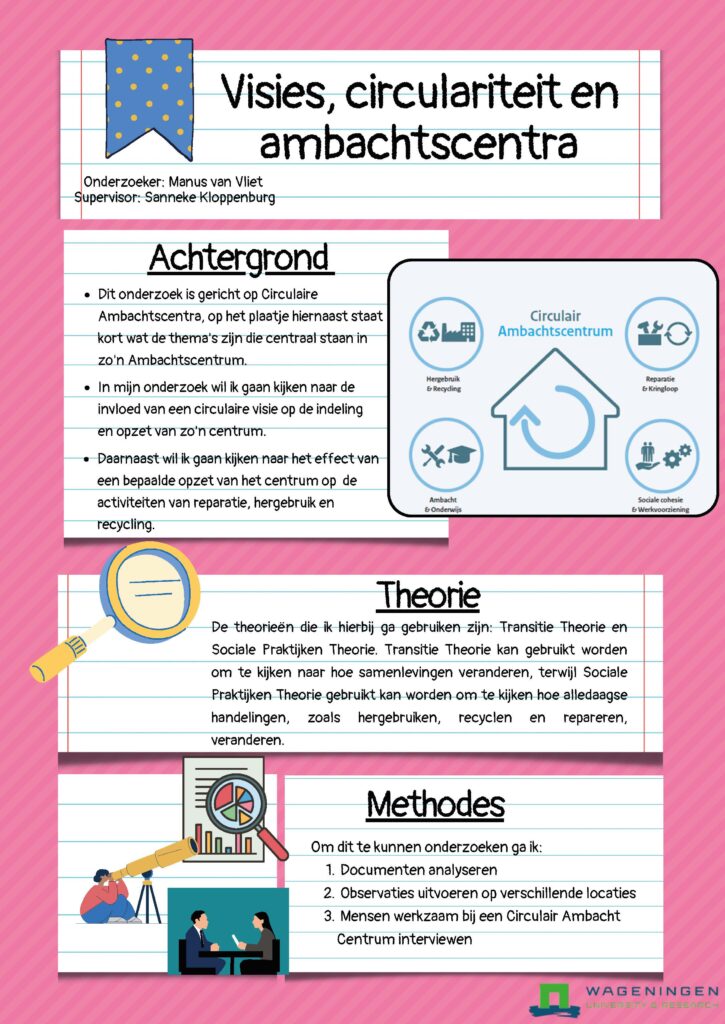
Manus van Vliet examined the role of Dutch Circular Craft Centres in supporting the transition towards a circular economy. Drawing on Transition Theory and Social Practice Theory, his research investigated how recycling, reuse, and repair are organised in practice.
The findings reveal a gap between policy ambitions and everyday realities. While repair is often promoted as an important circular strategy, it frequently receives less attention than reuse activities. The research provides valuable insights into the practical challenges and opportunities faced by Circular Craft Centres.
Community-Based Clothing Repair
Nora Massen
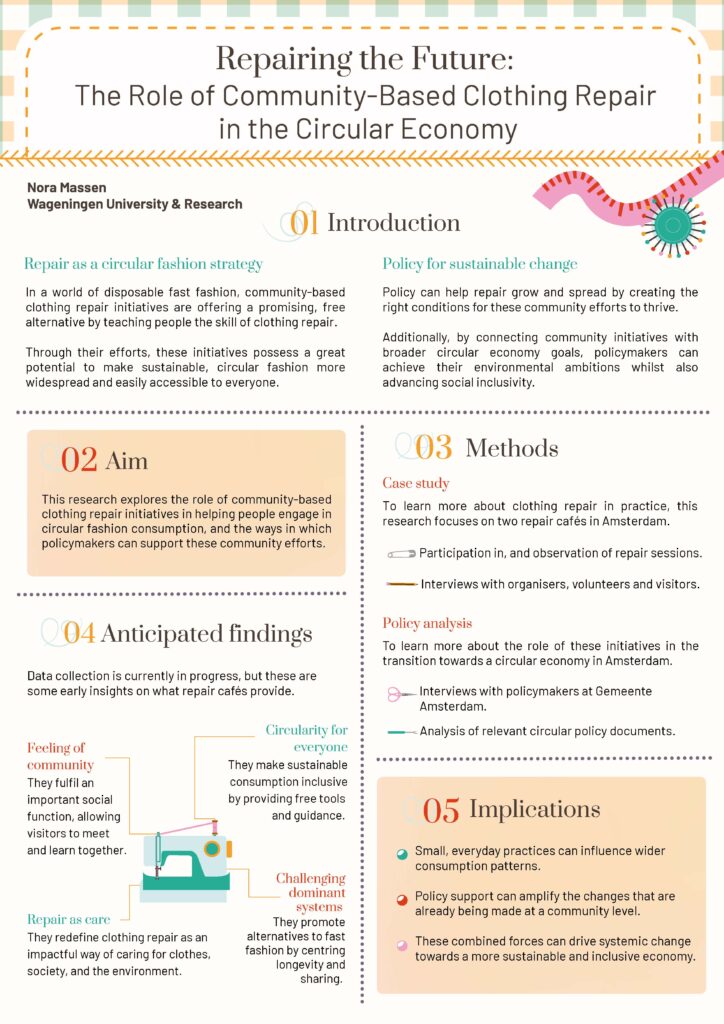
Nora Massen's MSc research explored the role of community-based clothing repair initiatives within the circular economy. Her work examined how local repair activities contribute to extending the lifespan of clothing, reducing waste, and strengthening social connections within communities.
Caring for Clothing and Consumption Practices
Nele Philippsen
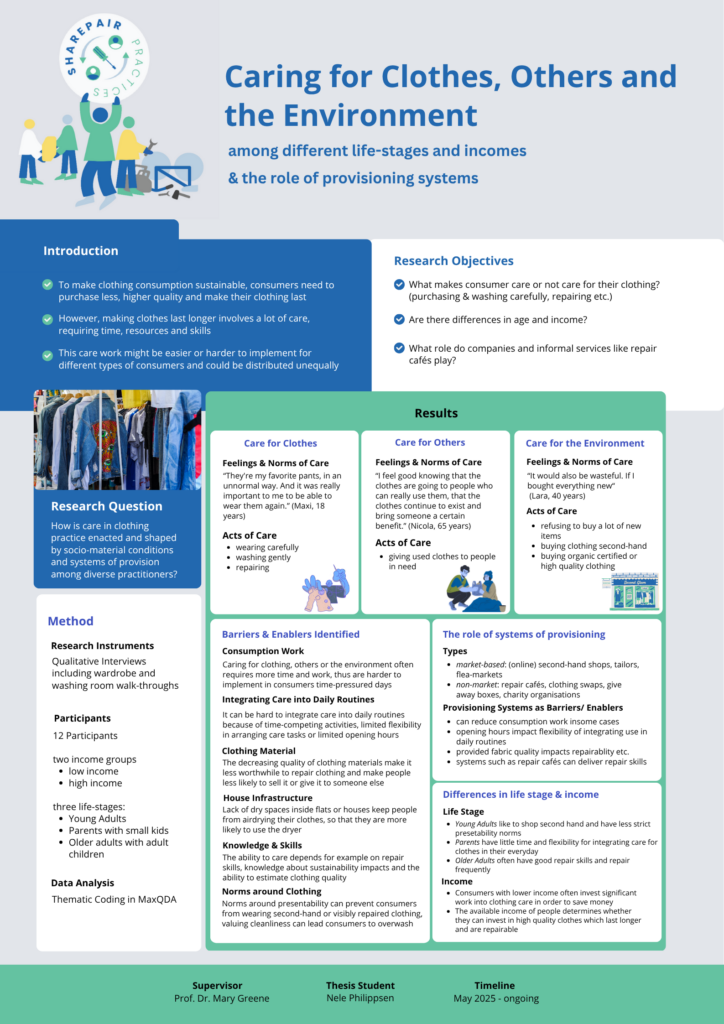
Nele Philippsen investigated how people care for their clothing and how everyday consumption practices influence the lifespan of garments. Her research sheds light on the relationship between maintenance, repair, and sustainable consumption, highlighting the often-overlooked role of care in circular fashion systems.
Designing Certainty in Peer-to-Peer Sharing
Jesse Lokin

For his graduation project, Jesse Lokin collaborated with Peerby, a Dutch platform that enables neighbours to borrow and lend everyday items. Although many people try the platform, retaining users has remained a challenge.
Through interviews, surveys, and literature research, Jesse identified a key obstacle: the effort required to coordinate borrowing often outweighs the perceived value. Users compare the experience not to other sharing platforms, but to the convenience of online shopping.
To address this, he developed Peerby Direct, a concept that replaces chat-based coordination with a structured booking process. Features such as automatic request handling, response timers, and flexible scheduling reduce uncertainty and simplify the borrowing experience. The concept was tested through prototypes and user feedback, demonstrating its potential to improve long-term participation in peer-to-peer sharing.
Read the full report or watch the project video here.
Several of these projects were presented during the ShaRepair Networking and Learning Event on 2 December, where students shared their findings with researchers, practitioners, and community partners working on the future of sharing and repair practices.